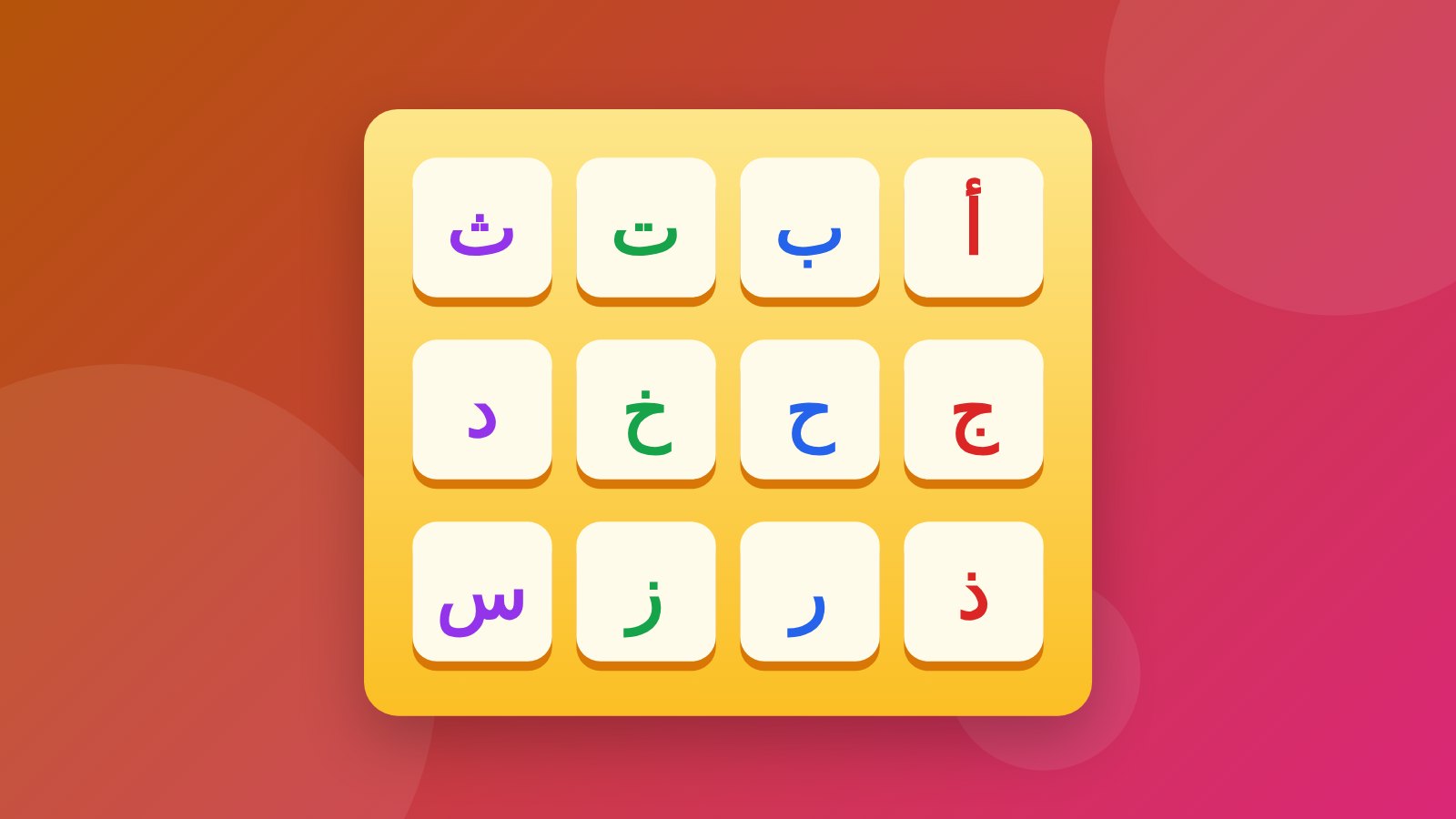
What counts as a word game?
A word game is an activity whose raw material is language: finding a word that starts with a letter, putting letters back in order, discovering words in a grid, choosing a synonym. Rules vary, but almost all of them ask you to understand an instruction and then search your memory for a word that fits.
These activities work for solo play and for competition among friends, and they adapt to every age and level. Their educational value becomes real when play goes hand in hand with feedback and a moment to revisit new words.
The main families of word games
- Category game (letter challenge): find words that start with a letter and belong to categories (animal, job, country…). It trains fast vocabulary retrieval.
- Crosswords: read clues and find words that interlock in a grid. They train precise meaning and reasoning by elimination.
- Anagrams (word scramble): rearrange letters to form a word. They train spelling and recognising syllables.
- Synonyms and antonyms: choose the closest or most opposite word. They sharpen your sense of nuance.
- Proverbs: complete a fixed expression. They open a window onto a language’s culture and images.
- Spelling games: pick the right letter in a word. They fix writing rules.
The games available on the platform
Tahadi Al Horouf brings together seven games: the letter challenge (solo, rooms and tournaments), crosswords (solo grid, daily challenge, rooms), word scramble, synonyms and antonyms, “Finish the proverb”, the Arabic spelling challenge and the Arabic grammar analysis tool. Most are available in Arabic, French and English, with a single leaderboard that adds up the points from every game.
A worked example
Letter M, categories animal, fruit and city. Possible answers: “monkey”, “mango”, “Madrid”. All three start with M and each belongs to the right category. An answer like “market” for the city would be rejected: it starts with M but is not a city. The example sums up the golden rule of almost every word game: two conditions to check — form and meaning.
Why games help learning — and their limits
Games make you retrieve words from memory under constraints. Educational psychology research shows that actively retrieving information, rather than re-reading it, helps you retain it. When you then revisit a new word, you link its form, meaning and use. Comparing your answers with others’ also draws attention to nuances between similar words.
Play alone is not enough to build a rich vocabulary. It is a supporting activity, best combined with reading, listening, conversation and dictionary use. Be wary of promises such as “get smarter by playing”: studies mostly show progress on the specific skills that are trained.
How to choose the right game
- For speed: the letter challenge.
- For precise vocabulary: synonyms and antonyms, then crosswords.
- For spelling: word scramble and the spelling challenge.
- For culture: “Finish the proverb”.
- For family or class play: multiplayer rooms in the letter challenge or proverbs game.
A strategy for finding words
Start with the categories you know best, then move on to harder ones. Within each category, think in sub-groups: for animals, the farm, the forest, the sea, birds. If nothing comes, move on and come back later. After the game, note one or two new words rather than a long list.
A short exercise for beginners
Pick a letter and three familiar categories, set a timer for one minute and write one answer per category. Then check, without focusing on speed:
- Does each word start with the letter and belong to the category?
- Have I checked the meaning of an unfamiliar word in a reliable dictionary?
- Can I write a short sentence with one of the words?
- Try again another day with another letter, comparing what you learned, not just your points.
Common mistakes
- Choosing a word only because it starts with the right letter.
- Using an unfamiliar name without checking it.
- Treating every different answer as wrong without re-reading the rules.
- Making typos by rushing.
An activity sheet for home or class
Write three letters on a sheet and choose two categories per letter. Give everyone the same time, then discuss the answers instead of just announcing a winner. Ask each person to explain why their word belongs to the category, and check unfamiliar words together. Beginners write one word per category; more advanced players add a second word or a sentence.
❓ Frequently asked questions
Are the games free?
Yes. All games are free and no ads appear on the game screens.
From what age?
Most games suit children from about eight with an adult, as well as teenagers and adults. Grammar analysis and advanced spelling are aimed more at secondary school and beyond.
Do I need to install an app?
No. Everything runs in the browser on computers, tablets and phones.
How are points from different games added up?
Each game is converted into unified points from 10 to 100 based on your share of correct answers, then everything is added up on the overall leaderboard.