How the game works
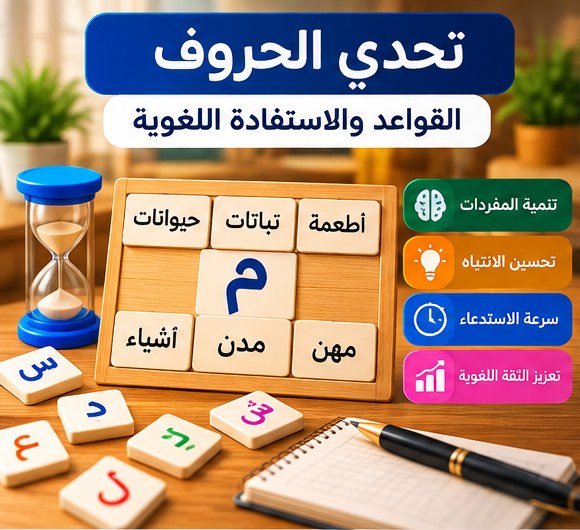
The letter challenge is a game of recall and classification. A letter is drawn at random, and for each category you look for a word that starts with that letter: boy name, girl name, animal, fruit, vegetable, job, object, capital city, country and currency. An answer only counts if it starts with the right letter and genuinely belongs to the category.
Speed matters, but it is not enough. A word typed too fast, misspelled or placed in the wrong category scores nothing. The winning habit is to find an idea, then spend one second checking the first letter and the meaning before moving on.
In solo mode, the goal is to fill as many correct boxes as possible before time runs out. In multiplayer, everyone gets the same letter at the same moment, so answers can be compared at the end of the round.
A sample round
Take the letter M. You might write “Mark” for a boy name, “Maya” for a girl name, “monkey” for an animal, “mango” for a fruit, “mushroom” for a vegetable, “mechanic” for a job, “mirror” for an object, “Madrid” for a capital, “Mexico” for a country and “manat” for a currency.
The example shows two separate steps: retrieving a word from memory, then checking that it follows the rule. “Manchester” starts with M but is not a capital; “medicine” is not a job, while “medic” is. Those quick checks are what separates a fast player from an accurate one.
What each category accepts
- Names: common first names are accepted; a simple name beats a rare compound one.
- Animal, fruit, vegetable: the general name of the species is enough (“tiger”, “fig”, “turnip”).
- Job: the name of the profession, not the workplace (“baker” yes, “bakery” no).
- Object: any non-living thing you can touch (“key”, “chair”, “lamp”).
- Country, capital, currency: the official or usual name (“Rabat”, “Peru”, “dollar”).
How points are calculated
Each accepted answer is worth ten points. At the end of the round, a table shows for every box whether the word was accepted and, if not, why it was rejected. The help button, shown as a light bulb, reveals a correct answer for an empty box in exchange for ten points; it can only be used once per category.
On the platform’s overall leaderboard, every game is converted into unified points: ten points for taking part, then up to ninety points depending on the share of correct answers. This keeps the ranking fair whichever game you prefer.
Multiplayer rooms and tournaments
A multiplayer room is created in one click and gives you a code to share with friends, family or students. The host, marked with a crown, starts the round once at least two players are connected. The round ends when everyone has submitted or the timer runs out, and then every answer and score is shown. Rooms include a text chat, and the host can start a new round with a different letter.
The automatic tournament gathers players into a group and then pairs them in successive matches until the final ranking is known. To keep comparisons fair, you can only join a room or tournament in your own game language.
The mental skills involved
A round draws on semantic memory, the ability to reach words through their meaning and category. You also have to keep the letter and category in mind, reject words that do not fit, and switch strategy when ideas dry up. These operations resemble the “verbal fluency” tasks psychologists use to study word retrieval.
That is a description of the skills involved, not a promise: playing will not magically raise your intelligence. Research reviews on game-based learning report effects that vary with game quality, practice time and how closely the trained skill matches what is measured. The most reliable gains come from combining attempts, feedback and later review.
Turning every round into a vocabulary lesson
After each game, pick three words you did not know or could not find in time. Check their meaning in a reliable dictionary, note the spelling and write a short sentence with each one. For place names, check the most common spelling.
You can also keep a notebook by category: animals, jobs, countries, objects. Next to each word, write one distinctive fact rather than building a bare list. Testing yourself regularly and reviewing after a few days is one of the best-documented study techniques.
Handling difficult letters
In English, letters such as U, V, I or J give fewer ideas in some categories. Do not get stuck: fill the safe boxes first, then come back to the hard ones. Build a small reserve: “Uganda”, “Ursula”, “umbrella” for U; “Victor”, “violin”, “vet” for V. Letters that are almost impossible for ten categories (Q, X, Y and Z) are removed from the English draw so that every round stays playable.
Common mistakes to avoid
- Writing a word with the right letter that does not belong to the category.
- Confusing a job with its place (“pharmacy” instead of “pharmacist”).
- Using an obscure proper noun without being sure it exists.
- Rushing and leaving a typo that makes the word unrecognisable.
- Giving up on a hard category instead of coming back to it at the end.
A simple plan for an educational session
- Choose an easy letter and play a full round.
- Compare answers aloud and explain each choice.
- Look up the meaning of two new words together.
- Play again with a harder letter and notice the progress.
❓ Frequently asked questions
Do I need an account to play?
No. A nickname is enough and is remembered on your device. An account only helps you keep your history across devices.
Why was a correct word rejected?
Answers are first compared with the game dictionary, then checked by a smart correction system if they are not in it. A rare or misspelled word may be rejected; report it from the results page and we will review it.
Can I play in Arabic, French and English?
Yes. Change the site language: the letter, categories and dictionary change, and each answer is checked in its own language.
How long is a round?
Three minutes in both solo and multiplayer. You can finish earlier at any time.
Is the help button free?
No: it costs ten points from the round and works once per category, on an empty box only.
📚 Sources and further reading
- Sailer, M. & Homner, L. (2020). The Gamification of Learning: A Meta-analysis. Educational Psychology Review, 32, 77–112. Link
- Wouters, P. et al. (2013). A meta-analysis of the cognitive and motivational effects of serious games. Journal of Educational Psychology, 105(2), 249–265. Link
- Dunlosky, J. et al. (2013). Improving Students’ Learning With Effective Learning Techniques. Psychological Science in the Public Interest, 14(1). Link